Muck Diving in Alor
The Ultimate Guide to Indonesia’s Hidden Macro Paradise
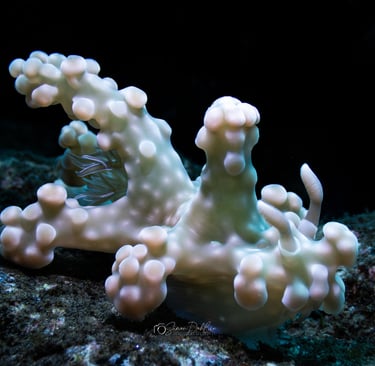
If you tell a reef diver you’re traveling to the remote reaches of the East Nusa Tenggara province to spend a week staring at volcanic silt and some dead seagrass, they might assume you’ve spent too much time at depth. But for those of us who spend every day in the water at Alor Underwater Explorers, that silt is the most productive habitat in the ocean.
Muck diving is the ultimate game of observation. It’s about slowing down to a crawl and looking for things that don't belong. In Alor, this isn't just a niche interest. It is a world-class experience that rivals the most famous macro spots in the world, including Lembeh and Ambon.
As the team behind Moko Alor Dive Resort and Naraya Alor Dive, we’ve spent years mapping the slopes of the Pantar Strait. We’ve learned where the Rhinopias hide during the full moon and which bays hold the most Flamboyant Cuttlefish. This guide is a deep dive into the reality of Alor’s macro scene, stripped of the marketing fluff.
1. Defining the Muck Environment
Muck diving refers to diving on substrates that most people would find boring. We are talking about black volcanic sand, silty mud, coral rubble, and organic detritus.
The appeal lies in the biodiversity. On a healthy coral reef, space is at a premium. Competition is fierce, and predators are everywhere. To survive, many species have evolved to occupy the empty spaces—the muck. Here, camouflage is the only defense. Animals have adapted to look like anything except a meal. They mimic clumps of algae, stinging hydroids, or even toxic flatworms.
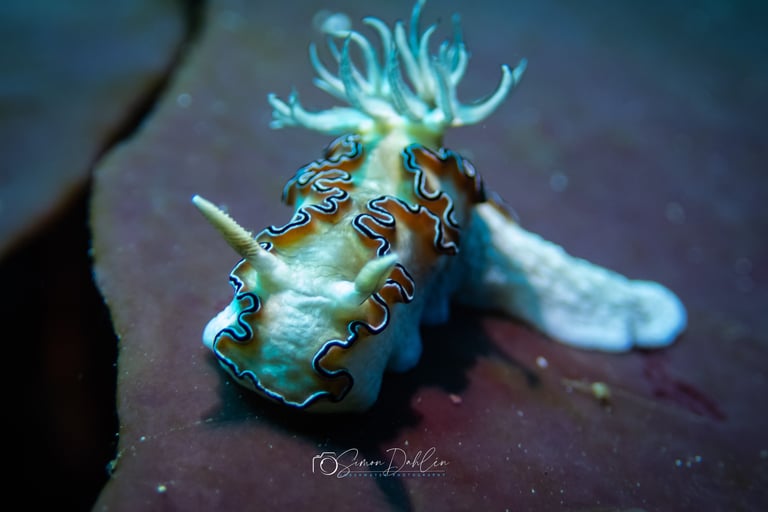
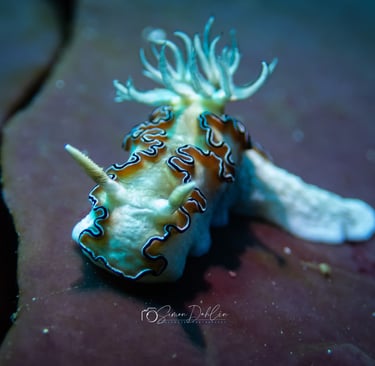
For underwater photographers, the muck offers a clean canvas. A bright purple Nudibranch on a dark, volcanic sand slope creates a level of contrast you simply cannot get on a busy reef.
2. The Alor Advantage: Why This Region Is Unique
Most macro destinations in Indonesia are in protected, almost stagnant bays. Alor is different. We are situated in a high-energy corridor where the Pacific and Indian Oceans meet. This creates a unique set of conditions that you won't find in North Sulawesi.
The Nutrient Pump
The Pantar Strait acts like a massive pump. The tides push enormous volumes of water through narrow channels, bringing up cold, nutrient-rich water from the deep. These nutrients are the foundation of the food chain. They support the crustaceans and cephalopods that make macro diving so rewarding.
Less Pressure, More Discovery
Alor is still an exploratory frontier. While other destinations have dozens of dive boats on a single site, we are often the only boat in the bay. This lack of diver pressure means the animals are less stressed, and the sites remain in better condition.
Best of Both Worlds
In many places, you have to choose: big fish or macro. In Alor, you don't. You can spend your morning watching hammerheads in 40-meter visibility and your afternoon hunting for Blue-ringed Octopus in a silty bay just a few miles away.
3. Topography and Conditions
Understanding the geology of Alor is key to finding the life here. The islands are volcanic, which dictates the type of sand and the temperature of the water.
Volcanic Black Sand
The sand at many of our favorite sites near Moko Alor is jet black. This isn't just an aesthetic choice for photographers; the mineral content of volcanic sand supports specific types of life, particularly certain species of octopus and cuttlefish that prefer the darker substrate for camouflage.
Sheltered Bays vs. Strait Slopes
We divide our muck diving into two categories.
The Bays: Places like Kalabahi Bay offer very traditional muck. It’s silty, shallow, and has very little current. This is where we find the weirdest cephalopods like Mimic Octopus and Wonderpus.
The Slopes: Along the edges of the Pantar Strait, we find slopes made of coral rubble and sand. These areas are more exposed to the currents, which brings in the Rhinopias and larger Frogfish.
Upwellings
Water temperature is a major factor here. Because of the deep-water upwellings, temperatures can fluctuate wildly. You might start a dive in 28°C water and hit a thermocline that drops to 21°C. This cold water is actually a benefit; it brings rare, deep-water critters into depths where we can actually dive with them. However, it means you need to be prepared. We always recommend a 5mm wetsuit and a hood for our guests at Naraya Alor Dive. If you’re cold, you’ll lose your patience, and patience is the most important tool for a macro diver.
4. The Alor Hit List: Signature Species
When we head out on the boats, these are the residents we are looking for. Our guides have developed a sixth sense for spotting these animals, many of which are smaller than a fingernail.
Rhinopias (Scorpionfish)
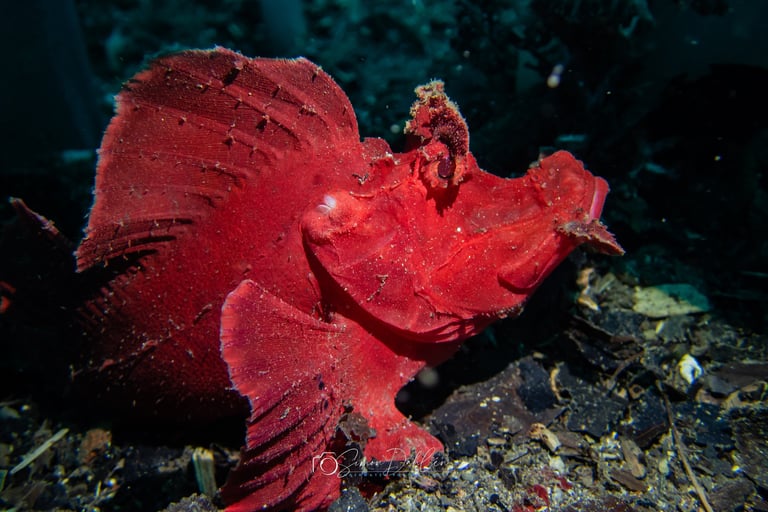
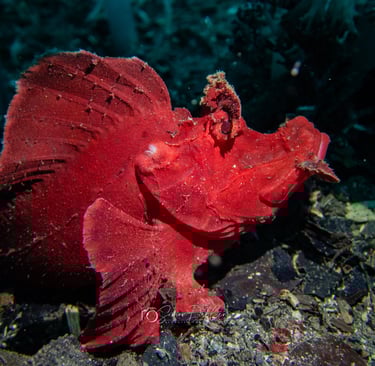
Alor is arguably the best place in Indonesia to find Rhinopias. We see both the Weedy Scorpionfish (Rhinopias frondosa) and the Paddle-flap Scorpionfish (Rhinopias eschmeyeri).
The Look: They look like something out of a science fiction movie. They are covered in skin flaps and weed-like appendages that break up their silhouette.
Behavior: They don't swim; they hop along the bottom. They are incredibly patient predators, waiting for a small fish to swim within range of their cavernous mouths.
Photography: They are one of the most photogenic fish in the ocean, but they can be tricky to light because of all their appendages.
Frogfish (The Anglers)
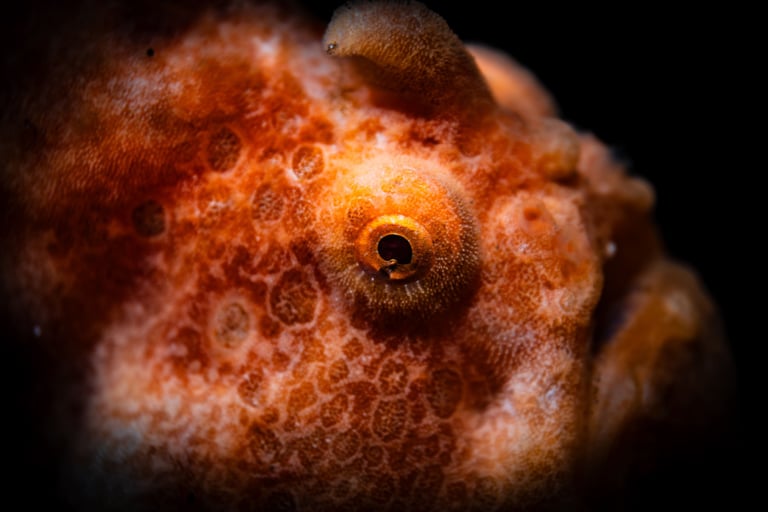
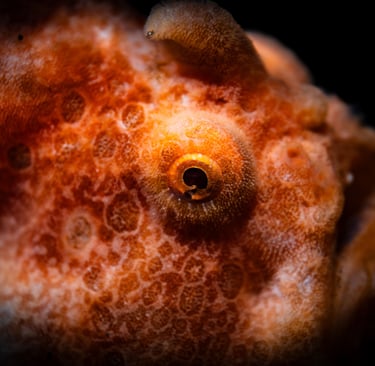
We have a massive variety of frogfish in Alor. We find Giant Frogfish that look exactly like the sponges they sit on, as well as the more elusive Warty and Painted varieties.
The Hunt: We look for anomolies on the reef. If a sponge has a mouth and eyes, it’s probably a frogfish.
The Lure: Watching a frogfish use its lure (the esca) to attract prey is one of the coolest behaviors you can witness underwater.
Blue-Ringed and Mototi Octopus
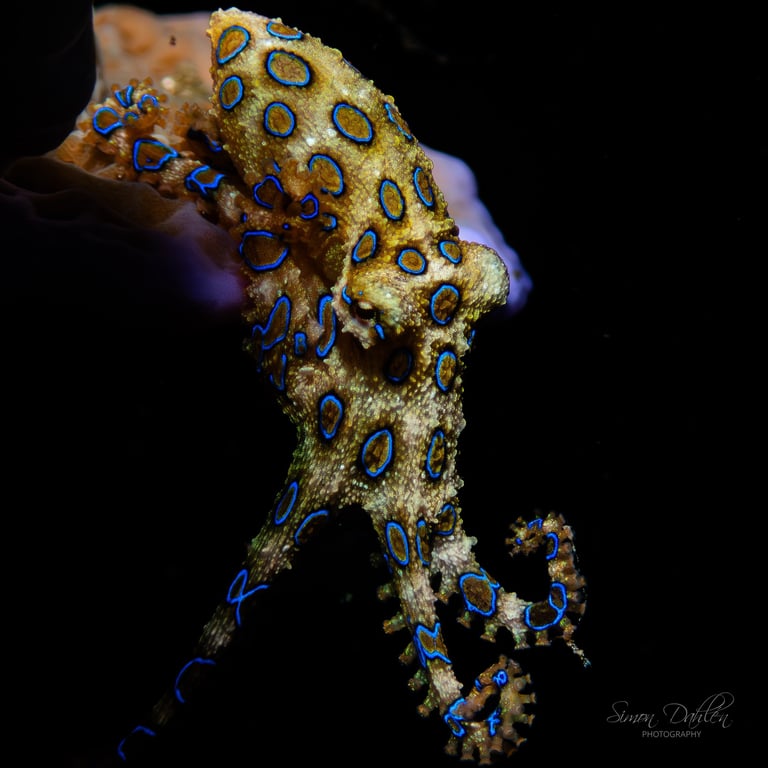
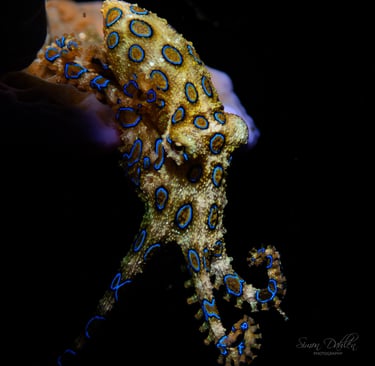
Alor is a hotspot for rare cephalopods. The Blue-ringed Octopus is small and shy, but its iridescent rings are unmistakable. The Mototi Octopus, or the Poison Ocellate Octopus, is another favorite. It has two fake eyes on the side of its body that it flashes when it feels threatened.
Ghost Pipefish
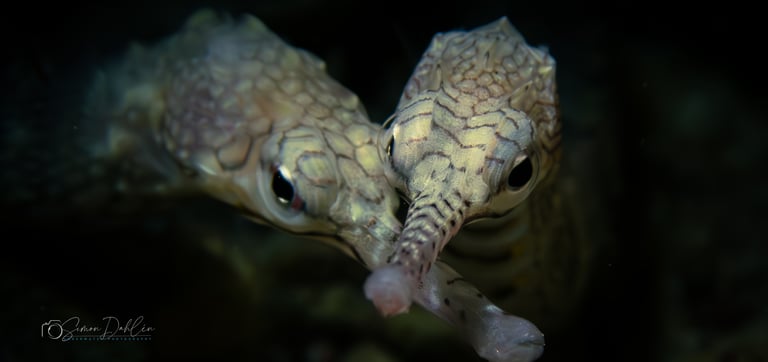
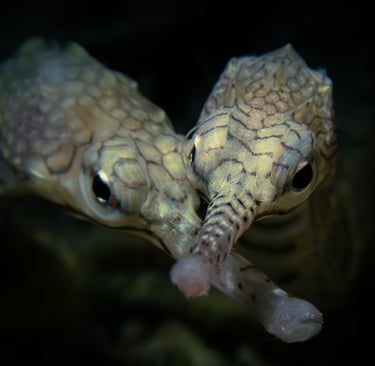
Ornate, Robust, and Halimeda Ghost Pipefish are common here. They are usually found head-down, perfectly mimicking a piece of seagrass or a crinoid arm. The Ornate variety is a favorite for photographers because of its complex patterns and vibrant colors.
Flamboyant Cuttlefish
These are the only cuttlefish that walk rather than swim. They are small, but they pulse with color when they are on the move. We usually find them on the silty slopes where they hunt for small crustaceans.
Nudibranchs
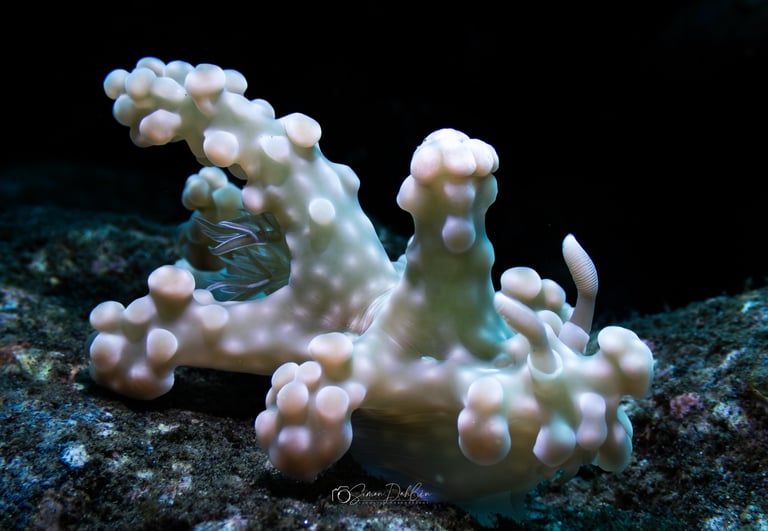
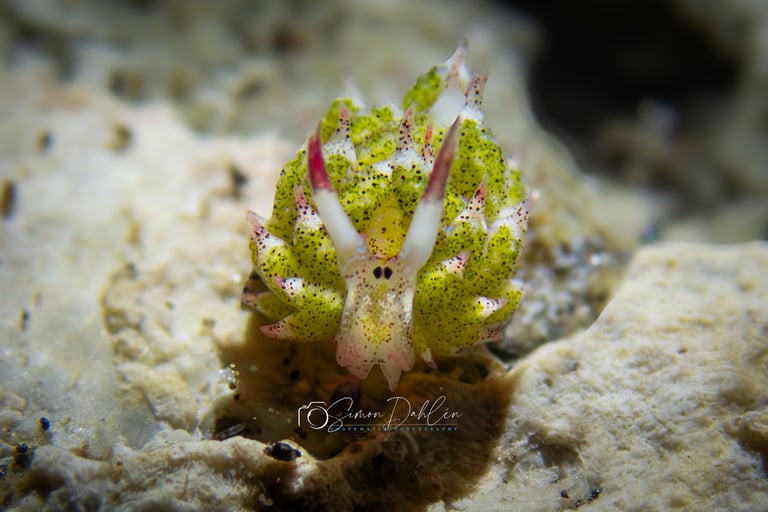
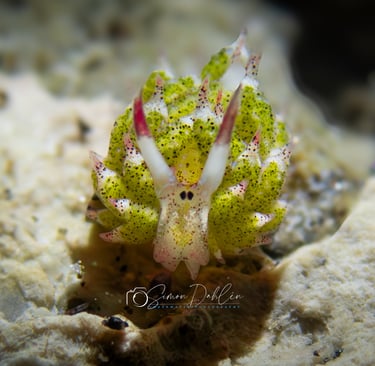
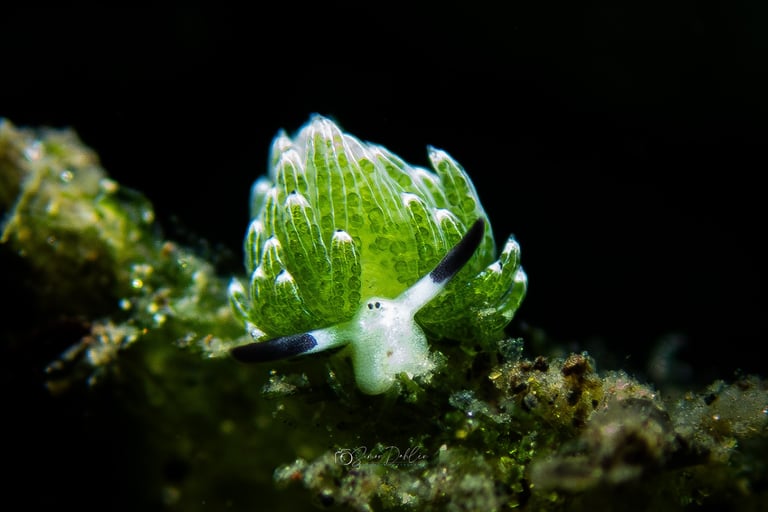
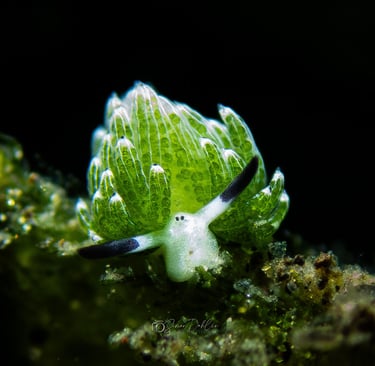
The diversity of nudibranchs in Alor is staggering. From the tiny Shaun the Sheep (Costasiella kuroshimae) to the massive and rare Miamira alleni, there is always something new to find. We often spend entire dives in a five-meter radius just looking at the different species on a single patch of algae.
Shrimps
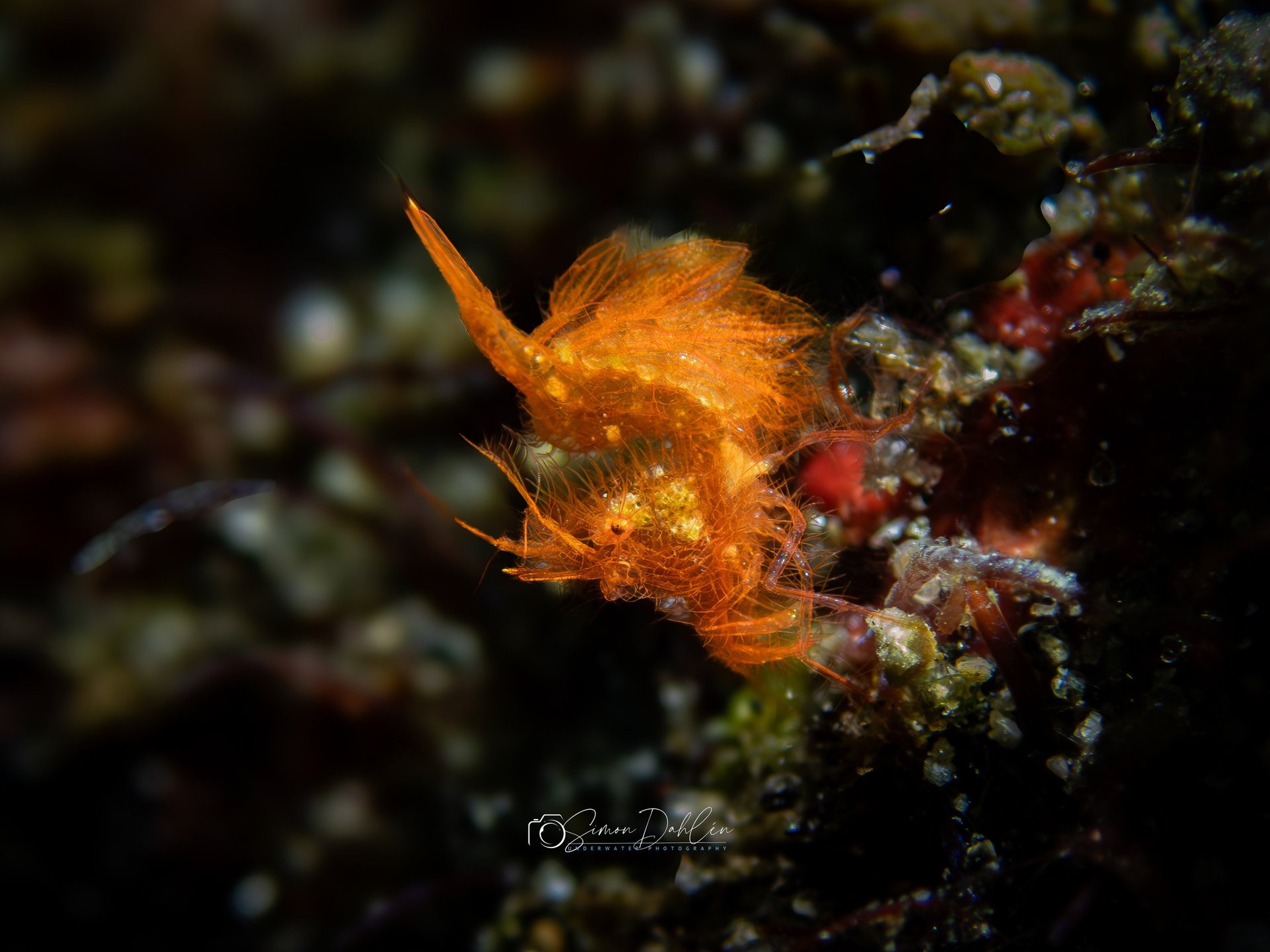
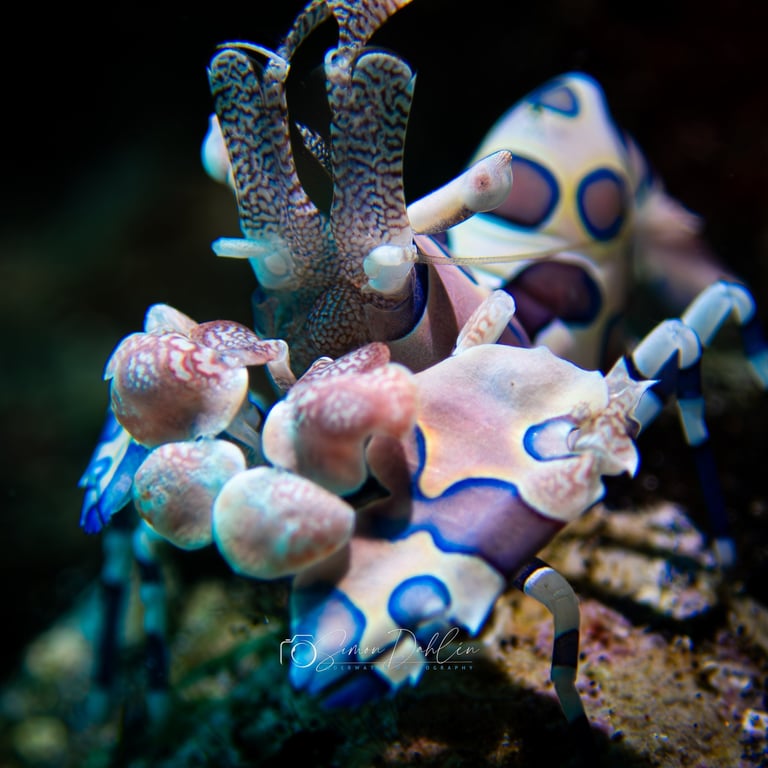
Alor is a heavyweight destination for crustacean lovers. The variety here is staggering, ranging from the charismatic to the nearly invisible. We regularly find Harlequin shrimp working in pairs to flip over sea stars on the rubble slopes, alongside the bizarre, long-beaked Donald Duck shrimp. If you’ve brought a high-powered macro lens, we can hunt for the Hairy shrimp—which look like nothing more than a stray bit of algae to the naked eye—or the rare and intricately patterned Spiny Tiger shrimp.
5. How Alor Compares to Other Destinations
It’s the question we get most often: How does this compare to Lembeh?
Lembeh is the undisputed capital of muck, and the density of critters there is hard to beat. However, Lembeh can feel like a factory. There are a lot of boats, a lot of divers, and the sites can feel crowded.
Alor offers a more rugged, authentic experience. Our sites are cleaner, the visibility is generally better (often reaching 15-20 meters on muck sites), and you have the exclusivity of being the only divers on the site. Plus, the combination of world-class walls and muck means you get a much more diverse trip. If you’ve already done Lembeh and Ambon, Alor is the logical next step.
6. Seasonality and Timing
While we dive year-round, the macro scene changes with the seasons.
The Dry Season (April to November): This is the most popular time to visit. The seas are calm, and the weather is predictable.
The Peak Macro Months (September to November): This is when the water is at its coolest. Many of the rarest critters, including the Rhinopias, seem to be more active and easier to find during these cooler months.
Visibility: Muck sites by nature have lower visibility than our reef sites, but in Alor, visibility rarely drops below 10 meters, even in the siltiest bays.
7. Expert Tips for Macro Photographers
If you’re bringing a camera to Alor, you need to be prepared for the specific challenges of our environment.
Buoyancy is Everything
This cannot be overstated. One bad kick on a silty slope will ruin the visibility for the rest of the dive. We encourage our guests to practice neutral buoyancy and to use a single finger on a piece of dead rubble or a muck stick to stabilize themselves if they need to get a steady shot.
Lighting the Black Sand
Black sand is a light sink. It absorbs your strobe flashes. To get the best results, we recommend using a snoot. A snoot allows you to narrow your light beam so it only hits the subject, leaving the background in total darkness. This creates a high-end look and eliminates backscatter from the silt.
Lens Selection
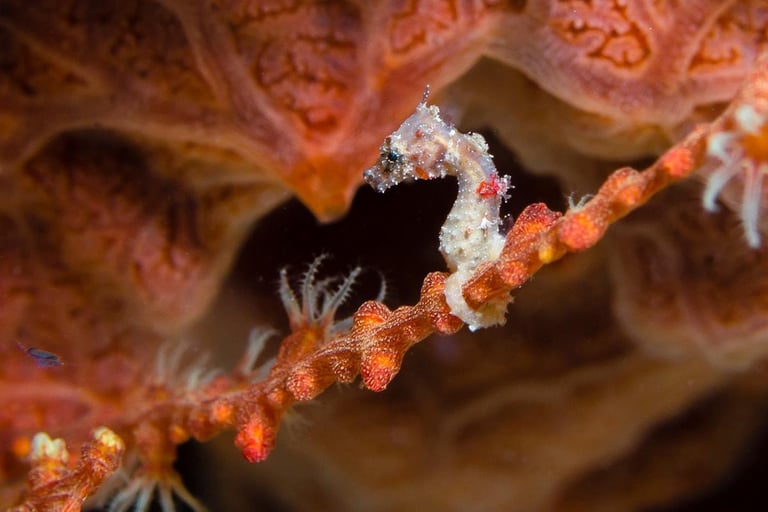
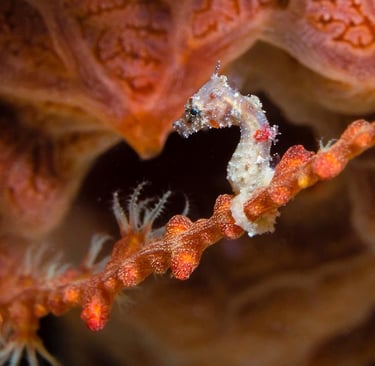
A 60mm macro lens is the most versatile choice for Alor. It allows you to shoot larger subjects like Rhinopias while still being able to get close to nudibranchs. If you’re a fan of super-macro, a 100mm or 105mm lens with a diopter is the way to go for the really tiny stuff like Pygmy Seahorses.
8. Why Dive with Alor Underwater Explorers?
At Alor Underwater Explorers, we aren't just taking you on a tour. We are sharing our home with you.
Experienced Local Guides
Our guides are not seasonal staff. They are local experts who have spent their lives on the water here. They understand the tides and the behavior of the animals. They know which sites are best for specific species and how to find them without disturbing the habitat.
Small Group Philosophy
Muck diving in a large group is frustrating. It leads to crowded subjects and silted-out sites. We keep our groups small to ensure you have the best possible experience and plenty of time with each critter.
Commitment to Protection
We love our muck sites and we want to keep them pristine. We follow strict environmental guidelines and we expect our guests to do the same. No touching, no moving animals for photos, and no damaging the substrate.
9. Frequently Asked Questions
Is muck diving suitable for beginners? Yes, but you need to have a handle on your buoyancy. If you are still struggling to stay level in the water, we recommend doing a few reef dives first to get your weighting dialed in.
What is the best camera for muck diving? Any camera with a macro mode will work, but a mirrorless or DSLR setup with a dedicated macro lens and strobes will give you the best results.
How many days should I plan for an Alor trip? To see both the reefs and the muck, we recommend at least 7 to 10 days. This gives us enough time to visit the different regions of the strait.
What is the water temperature? It ranges from 21°C to 28°C. A 5mm wetsuit and a hood are highly recommended.
Is Alor better than Lembeh? It’s different. It’s more exploratory and offers more variety in terms of topography and visibility.
Can I see big fish while muck diving? Occasionally! We’ve had dives where we were looking at a nudibranch and a dugong or a thresher shark swam past in the blue. That’s the magic of the Pantar Strait.
Muck diving is an acquired taste that quickly becomes an obsession. There is nothing quite like the feeling of finding a rare animal that has spent millions of years trying to remain invisible. In Alor, we have some of the best macro diving on the planet, and we are proud to be the ones who can show it to you.
Whether you’re staying at Moko Alor Dive Resort or diving with Naraya Alor Dive, you’re in for an experience that you won't find anywhere else in Indonesia. We don't just find the animals; we respect them and their environment.
Ready to find the weirdest critters in the ocean? Contact Alor Underwater Explorers today to book your trip. We’ll see you on the sand.